Look inside your kettle. That white crust is the same mineral travelling through every appliance in the house that heats or freezes tap water, and water in this part of New Jersey carries plenty of it. Scale never breaks anything on a Tuesday. It narrows passages, blankets heaters and props up switches, and then a machine that behaved for eight years starts acting up and the bill lands all at once.
The dishwasher shows it first
Mineral settles wherever water stands hot and still, which describes the bottom of a dishwasher exactly. It coats the heating element, so the same wash spends more energy for less heat. It closes the jets in the spray arms until the top rack stops coming clean. It builds on the inlet screen behind the fill valve and stretches cycles. And it can hold the sump float partway up, at which point the control believes there is water where there is none and stops mid-cycle.
- Pull and rinse the filter monthly. On this water that is ordinary upkeep, and it takes about as long as unloading the top rack.
- Keep rinse aid topped up. It is what stops dissolved mineral drying onto glass, and machines that dry by condensation rather than a heated element depend on it completely.
- Run a citric acid descaler every couple of months. Skip the household vinegar habit: it is weak against real buildup and unkind to rubber seals and aluminum trim.
- Check for a salt reservoir. Several European machines carry a built-in softener with a cap in the tub floor, and plenty of owners never learn it is there. Coarse dishwasher salt only.
Ice makers: follow the water backward
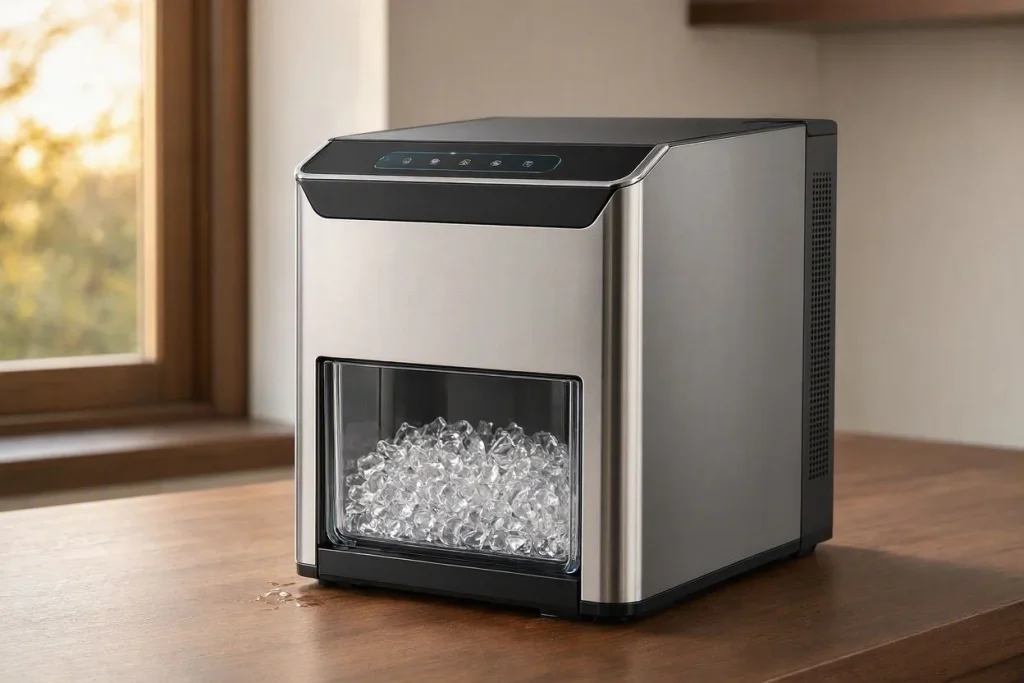
Hollow shells, cloudy cubes and a bin that never fills are almost always a supply story. The fill valve meters a measured shot into the mold, and a screen closing up with mineral delivers less than the mold needs, so the machine freezes whatever arrived. Scale narrows the fill tube too, and it loads a refrigerator filter faster than the interval on the box assumes. If the kettle wears a crust, so does the ice maker.
Steam ovens: the descale prompt is the maintenance schedule
A steam oven boils tap water on purpose, so it concentrates mineral by design. The reminder on the display is not a nag. Postpone it a year and deposits work past the boiler into the pump and the level sensor, turning a job that wanted a bottle of solution into one that wants components. Use the tablets the manufacturer specifies; homemade acid mixes attack seals and can cost you whatever cover the appliance still carries.
Built-in coffee systems: weak coffee is a plumbing report
When espresso from a built-in unit goes thin and slow, usually nothing has failed. The path through the boiler and brew group has closed up, and pressure that used to push water through coffee is now spent pushing it through mineral. Run the descale routine the moment the machine asks, not three weeks later. A routine that keeps restarting itself is reporting how much buildup is in there, or a fouled flow sensor, and it is worth attention before brew group seals start weeping into the cabinet below.
Washers, quietly
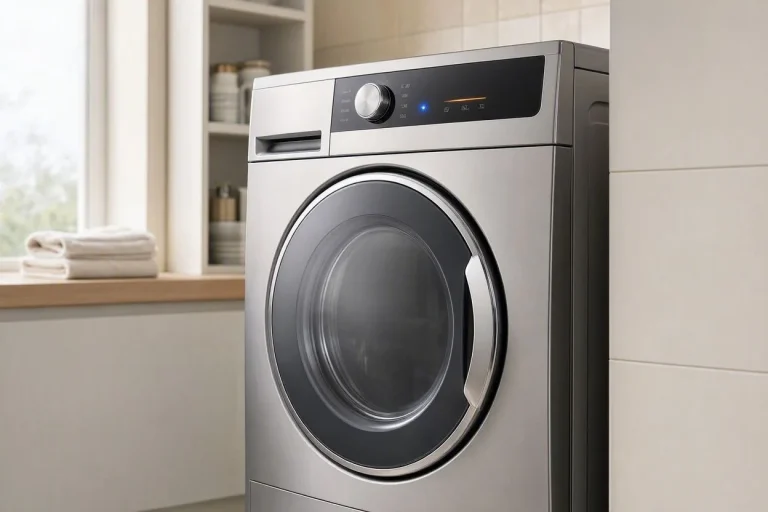
Fill times creeping longer season by season is the tell nobody notices, because it happens across years. Two small screens sit where the hoses thread onto the back of the machine. Shut the valves, unthread the hoses, pick the screens clean, put it all back. Twenty minutes, no parts, cycle times down again.
The one thing that treats the cause
Everything above manages mineral. Only treating the water where it enters the house removes it. A whole-house softener is real plumbing work with a running cost in salt, so it is no casual purchase, but in a kitchen carrying a steam oven, a coffee system, an ice maker and two dishwashers the arithmetic gets serious fast. Softened water also wants noticeably less detergent, which catches people out the first month. We neither sell nor fit them. We just see the difference between kitchens that have one and kitchens that do not.
What a technician can undo, and what he cannot
Clearing an ice maker’s fill path, descaling a brew group, freeing a stuck float and swapping a spray arm are routine work. An element insulated under years of mineral, a valve that no longer seats cleanly, a boiler with hard deposits through it: those want replacing rather than rescuing, and pretending otherwise costs you twice. We fit genuine parts while a maker still supplies them, and a discontinued component gets said out loud in your kitchen, not discovered later on an invoice.
Call (201) 000-0000. The diagnostic charge is settled by phone rather than at your door, the repair itself gets one number as soon as we know what the machine needs, and that charge comes out of the number if you say yes.